
PQA is celebrating its 20th year in 2026. In addition to special events at the 2026 PQA Annual Meeting in Baltimore, Md., May 12-14, PQA will recognize across the year the people, milestones and achievements that have defined the organization’s success. We also will look to the future and PQA’s continuing work to improve the quality of medication use.
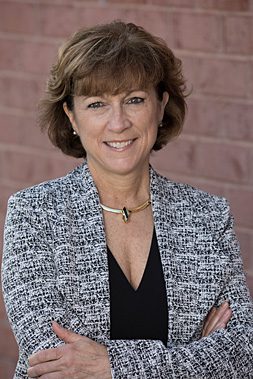
Laura Cranston, RPh, served as PQA’s founder and chief executive officer from its establishment in 2006 through 2020. In this Q&A, she shares insights on PQA’s creation, its growth, success and what the future might hold for PQA and quality.
Who were the key figures behind PQA’s establishment 20 years ago?
Mark McClellan, Administrator for the Centers for Medicare & Medicaid Services (CMS), had the vision to create an alliance focused on ensuring safe, appropriate and effective use of medications. Measurement was at the center, but there was also a vision to move towards value-based payment models focused on patient outcomes. His deputy administrator, Larry Kocot, had strong relationships with the pharmacy community, and together they brought NCPA, NACDS and AHIP together with AHRQ, AMCP, APhA, and NASPA to be the initial organizations to successfully launch PQA.
The leaders of these organizations made PQA’s establishment possible. AHIP had a formative role in providing the backend infrastructure for the organization’s first 18 months. The leadership of these founding members were committed to the mission and vision of PQA and to the growing relationship they had with CMS as they established the Medicare Part D program.
What was the model for how PQA would operate?
When PQA was established, there were many other quality alliances in the marketplace, including the Ambulatory Care Quality Alliance, the Hospital Quality Alliance, and even the Quality Alliance Steering Committee. Each of those alliances had a different model, and while I attended several of these alliance meetings on a regular basis, PQA was modeled differently and for a different purpose.
PQA, from the outset, was established to develop and validate quality measures for appropriate and safe medication use, as the federal government, through Medicare Part D, became the largest provider of prescription drugs in the U.S. PQA was established as a multi-stakeholder coalition that welcomed all comers. Those stakeholders included payers, federal and state agencies (including Medicaid), health plans, PBMs, community pharmacies (both chain and independent), accreditation agencies, patient advocacy groups, life sciences, academic institutions, consulting groups and more. There was a seat at the table and ways for representatives from all these stakeholders to meaningfully engage with PQA.
PQA remains the only quality alliance still in our health care ecosystem today, and it fills a unique niche that brought and kept the various stakeholders together.
What were PQA’s early years like?
For the first two years, PQA operated with a steering committee, cluster workgroups and many volunteers. PQA was a public-private partnership with CMS. After two years, PQA had grown to nearly 60 members and transitioned to a stand-alone 501c3 organization. PQA grew to a height of 250+ corporate members and represented every sector that touched the medication use process.
Interestingly, there were other important initiatives that PQA needed to engage with to be recognized for the work we were doing. We needed to be recognized within the National Quality Forum-convened National Priorities Partnership (NPP), which was an entity that played a crucial role in the development of national priorities in performance measurement within the health care sector. The NPP collaborated with HHS/CMS and set national priorities and goals that were part of the National Quality Strategy.
Additionally, PQA needed to ensure that the measures it initially developed and endorsed with PQA’s members were also endorsed by the National Quality Forum (NQF). That was a tall order for a small staff, and a great deal of time and energy went into the rigorous process of endorsement, re-endorsement and maintenance of measures.
Throughout PQA’s early years, Dr. Jeff Kelman, CMS’ Chief Medical Officer, was an advocate and trusted counselor for PQA and a tireless champion for the work that we were undertaking. Dr. McClellan set the vision, and it was Dr. Kelman and the Medicare Part D team, who supported PQA with their time and expertise in quality measurement, and implementation of those measures. PQA made regular road trips to CMS’ headquarters in Baltimore and shared with the Medicare Part D staff what was on our roadmap for development, key timelines, and we forged a strong working relationship. We wanted to ensure that the measures PQA developed would be considered in the regulatory processes set out to incorporate new measures into the program.
The earliest years really established PQA almost as a family. I say that because we had only a few staff and we would spend time together working on initiatives in pretty tight quarters. In fact, for the first four years or so, the Cranston home served as the headquarters of PQA.
Another factor that added to its uniqueness was our annual meetings in the earliest of days. A hallmark of our initial (and small) PQA Annual Meetings is that the number of individuals participating in the early days was somewhere between 50-60 people. Every individual introduced themselves at each meeting, and we spoke about the measures that were up for PQA-endorsement, and each member had one vote at that meeting. Individuals (one representative per company) were given a hand paddle to hold up and literally vote the measure either up or down. It was a very different feel to the Annual Meeting back then, compared to what it has grown into.
What was the biggest challenge in PQA’s early years?
PQA’s transition to an independent organization coincided with the 2008 recession, which significantly impacted the economy in both 2008 and 2009. These years were particularly challenging for PQA as a start-up organization. Despite these challenges, the commitment of the founding members, as well as a strong group of core stakeholders who had joined PQA, ensured their support to help PQA weather the downturn in our economy.
What were the major milestones that fueled PQA’s growth?
The introduction of the Medicare Part D Star Ratings program and the inclusion of PQA’s medication measures was critical. The Affordable Care Act and the addition of some PQA measures into the Display Measure set, the Medicaid Adult Core Set and in other programs, including some physician provider groups that were entering into value-based arrangements, further fueled the implementation and use of PQA measures.
How did PQA develop its first quality measures?
In its earliest days, PQA had a number of Cluster Groups. These were working groups that focused on a variety of different clinical areas, as well as areas that included communications, reporting and implementation.
However, to validate and test the measure concepts that were derived from these working groups, PQA contracted with NCQA. It was only as we headed into years three and four that we began to expand our internal team at PQA with the expertise to be able to do the validation and testing ourselves. Colleagues that included David Nau, Julie Kuhle and Lynn Pezzullo (who remains on the PQA team as Vice President for Quality Innovation) were instrumental in the earliest days of PQA. We also hired our first physician, Dr. Woody Eisenberg, who provided a unique perspective to our work and enabled us to have a voice and representation within many other quality circles.
What role did Pharmacy Quality Solutions (PQS) play in expanding the relevance of PQA measures?
The establishment of PQS in 2013 provided a neutral platform that brought visibility to quality measures to health plans, PBMs and community pharmacies. Pharmacy Quality Solutions was borne out of a pilot program that involved Rite Aid, CECity, and Avatar and the success of that pilot, together with the leadership of Lloyd Myers of CECity, David Medvedeff at Avatar at that time, and both David Nau and Mark Conklin, together with the very active engagement of our PQA Board of Directors led us to be able to successfully launch PQS without any outside investors.
With PQS and its EQUIPP platform in place, stakeholders were able to understand their performance on measures, and it provided the opportunity for pharmacists to intervene with the patients they serve to close gaps in care. Engaging major retailers, like Rite Aid and Walgreens, as part of the beta phase of EQUIPP was a game-changer.
How did PQA evolve over the past two decades?
As PQA grew, we established a broader strategic landscape that included core pillars of measure development, research, convening, and education – and we began building out a dedicated team to drive the growth of the organization. Today’s PQA reflects this focus: a robust measure development and maintenance team, dedicated research and education functions and thriving convening efforts.
What else stands out to you in PQA’s history?
PQA was one of those once-in-a-lifetime opportunities – professionally and personally, in terms of my career. There were many skeptics as to whether what PQA was building would last in the marketplace. However, what stands out to me that is unique about PQA’s history is the dedication of a core group of individuals and member companies. Some of these stakeholders were not natural partners and collaborators. In fact, oftentimes there were strong opposing viewpoints on many issues – including measurement. However, to be able to work through those issues, and find common space, true consensus and a willingness to collaborate made PQA unique.
When I think back to the first Annual Meeting of PQA, it was probably less than 50 individuals – and then when I left PQA, the Annual Meeting in 2020 was virtual (during COVID), one of the first virtual national conferences.
However, what truly stands out to me are the individuals and staff who made PQA what it is today, whose names bear mentioning (in alpha order). While this list is by no means exhaustive, there were countless individuals who rolled up their sleeves and committed their time, their leadership and their expertise.
- Vikki Ahern, CMS Medicare Part D team
- Mitch Betses, CVS Health, now, COO at Citiblock Health
- Carmen Bocchino, EVP of AHIP
- Annette Boyer, CECity
- Anne Burns, APhA representative to PQA
- Judy Cahill, AMCP
- Alicia DeStefano, Merck
- Dave Domann, Johnson & Johnson, a thought leader in the quality space
- William Fleming, formerly president of Humana’s Medicare business
- Jackie Green, PQA’s first Chief Operating Officer
- Karen Ignani, former CEO of AHIP, now CEO at Emblem Health
- Brian Jensen, Board member of the Community Pharmacy Foundation
- Michelle Ketcham, CMS Medicare Part D team
- Julie Kuhle, initially a consultant before joining the staff
- Tripp Logan, Owner, L&S Pharmacy in Charleston, Mo.
- David Medvedeff, CEO at Avatar, now, CEO at Radence
- Tom Menighan, EVP and CEO, APhA
- David Nau, initially a consultant with the University of Kentucky before joining the PQA staff in a performance measurement role, and PQS’s first CEO
- Eleanor Perfetto, patient advocate
- Bruce Roberts, then CEO of NCPA, now at Synerio
- Becky Snead, then CEO at NASPA, now at NCPA
- Brad Tice, CEO of RxGenomix
- Peter Wickersham, formerly with ESI, now at Gilead
The PQA staff was also known for its drive, its responsiveness and its commitment—all of which were second to none. PQA was a start-up in the pharmacy and broader health care arena, and there were not too many association start-ups that were emerging at that time. The staff was, and is, responsive, engaged and forward-thinking.
What set us apart, too, was the desire for companies to truly understand this space, and the leadership at major global organizations made a commitment to ensuring their cross-functional teams were equally engaged.
As an example, Merck had PQA’s leadership team visit their headquarters on a yearly basis, meet with cross-functional teams, and this helped stimulate some very exciting collaborations. Johnson & Johnson and Pfizer also did the same. These conversations helped shape some of the top initiatives, both from an educational and research perspective.
The commitment of our board members, who served for extended periods, was crucial. Creating an organization from scratch, without existing policies or procedures, required significant energy. Despite these challenges, we provided value and grew our membership base from 50 to 250 members over the first 15 years. The long-term dedication and support of our member leaders enabled PQA to grow and thrive.
Looking forward, what do you hope PQA can achieve in the medication use arena?
Having attended the 2025 PQA Leadership Summit, I know that PQA is in the midst of launching their next Blueprint for the next five years.
There are so many forces coming together as we head into 2026 – forces that include the full practice authority that many states are granting for pharmacists, the impacts of AI on every facet of health care, rural health transformation grants, and the introduction of multiple new models coming out of CMMI, most of which are focused on pricing (over quality, safety and appropriateness of medication use).
PQA was created to ensure we are focused on value over volume, but the default by so many entities is still on volume and costs, with no mention of quality. I am encouraged by the commitment of CMS to evaluate and modify, where necessary, the existing CMS Star Ratings program to ensure the focus remains on quality and outcomes and less of a focus on process measures. I encourage PQA to keep a laser focus on the opportunities to ensure they keep quality, safety, appropriateness and the value of pharmacist-delivered clinical services at the forefront of their work.
I am excited to connect with colleagues who helped build PQA into what it is today, and wishing PQA continued success as it enters into this new decade of growth.
PQA’s 20th anniversary celebrations are made possible in part by the generous support of Pfizer, Eli Lilly and Company, Humana and Centene. PQA does not endorse, recommend or favor any product, service or organization that is a sponsor.