
PQA members and health care quality professionals gathered in Baltimore, Md., May 12-14, for the 2026 PQA Annual Meeting.
Over three days, health care executives and quality professionals from pharmacies, health plans, health care providers, pharmacy benefit managers, life sciences companies, technology vendors, research institutions, academia and more addressed top issues and emerging trends in medication quality, measure development and implementation, care transformation and technology.
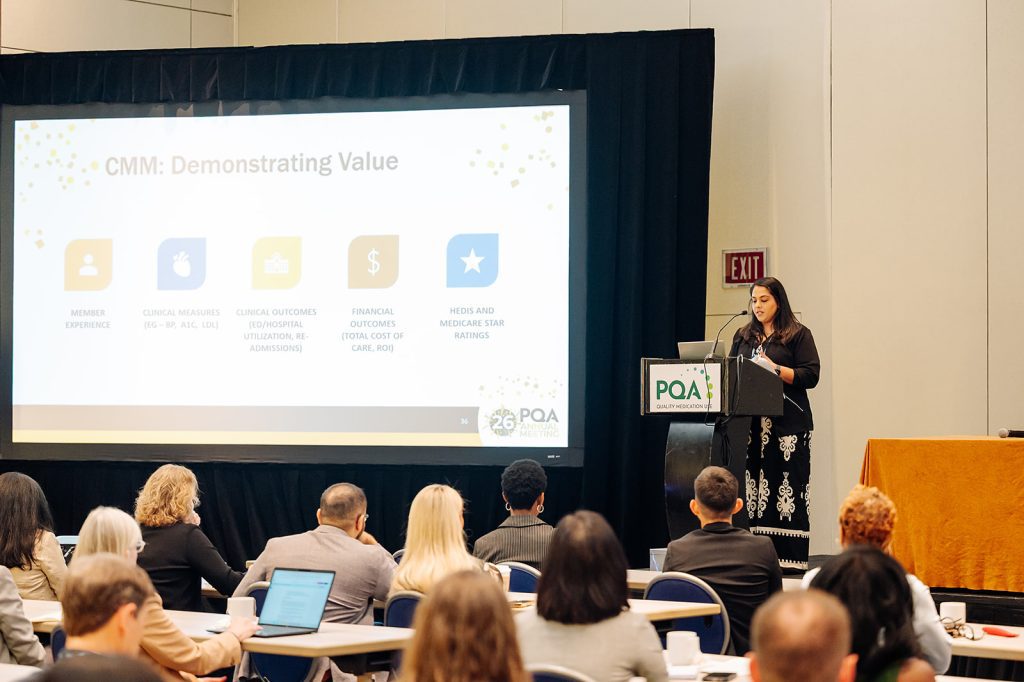
Attendees heard from more than 60 speakers across the general sessions, breakout sessions and briefing sessions. These nationally leading speakers shared expert insights and best practices for improving medication use quality from every angle in the industry.
“As we celebrate our journey, we will also have our eyes on the road ahead. Now, more than ever, comprehensive, team-oriented strategies are essential for enhancing care access, delivery and safe medication use.”
Jeff Rochon, FAPhA, FWSPA
Chair, PQA Board of Directors
Executive Director, Pharmacy HIT Collaborative
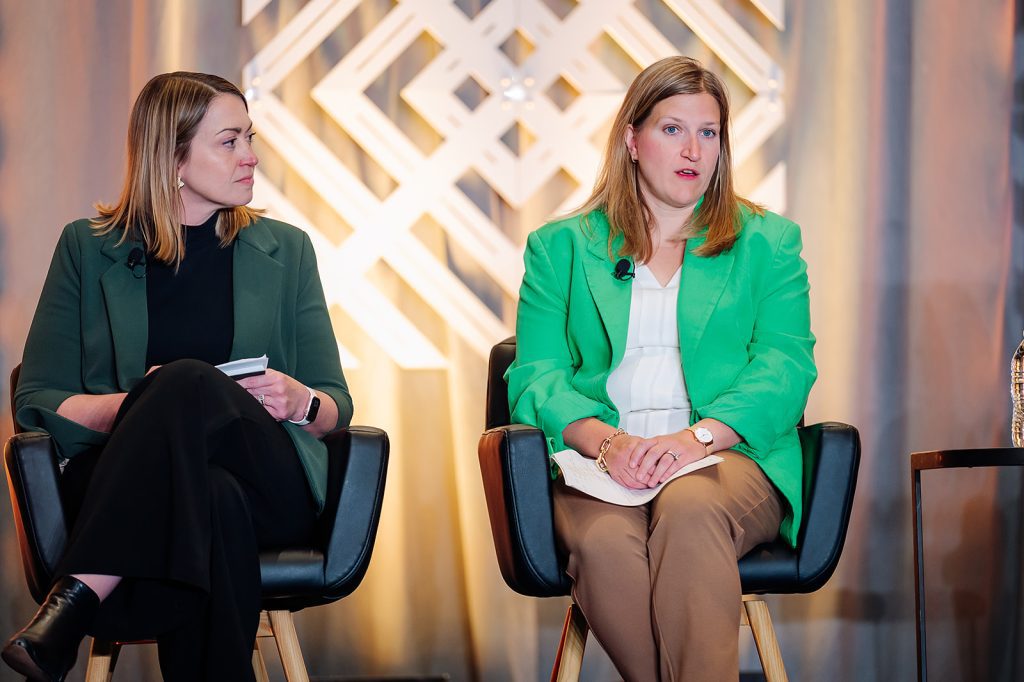
Inma Hernandez Delso, CMS Senior Advisory sat down with Micah Cost for a fireside chat explored the administration’s priorities for drug pricing policy and their implications for medication access and outcomes.
20 Years of Medicare Part D and PQA
- Panelists emphasized that PQA’s unique alliance structure—bringing together every sector of healthcare—has been central to its success over the past two decades.
- Beyond measures themselves, the panel reflected on PQA’s broader impact in fostering industry collaboration and innovation. Achievements highlighted included embedding quality into CMS Star Ratings, strengthening cross-sector partnerships, and helping launch initiatives like PQS, which connected health plans and pharmacies around performance improvement and value-based care.
Get the Balance Right: Increasing Affordable Access to GLP-1 Medications
- Emerging Medicare coverage pathways for GLP-1s represent a significant step toward improving patient access, particularly for beneficiaries who previously had limited or no coverage options. However, health plans continue to face uncertainty around long-term policy direction, utilization trends, overlapping programs, and how to sustainably manage coverage and rates.
- Panelists emphasized that obesity should be treated as a chronic disease state, not simply as “weight loss.” As coverage evolves, success will depend on balancing patient access with strong education, lifestyle management support, adherence, clinical outcomes and the development of meaningful quality measures and sustainable policy solutions.
Establishing the Value of Pharmacy Services: Clinical Documentation & Information Exchange
- Standardized, shareable documentation embedded in workflows is critical to clearly demonstrate pharmacy’s value in healthcare data and decision-making. Using consistent frameworks, such as the Medication Therapy Problem Categories Framework, improves outcomes, efficiency, and supports reimbursement by linking pharmacist interventions directly to measurable results.
- For pharmacy’s contributions to be consistently reflected in quality measurement, value-based care models, and healthcare decision-making, medication management services must be represented more consistently within the broader healthcare ecosystem.
Quality in Oncology: Progress Towards Measuring Adherence
- High-quality oral anticancer medication (OAM) care depends on coordinated, patient-centered care teams that deliver timely, integrated support.
- Accurate adherence measurement for OAMs requires stronger data interoperability. While claims data can provide useful insights, it has practical imitations and can lack critical clinical context, such as treatment intent.
Pharmacy and Medication Access
- Access challenges are growing and fragmented. Pharmacy deserts, closures, and uneven access to pharmacists limit care, while new access solutions increase coordination gaps.
- Availability, affordability, and acceptability issues, combined with reimbursement pressures and independent pharmacy closures, ignore patient convenience and needs.
Patient Perspectives on Refocusing the Medicare Star Ratings
- Authentic patient and caregiver engagement goes far beyond asking them to validate or approve a nearly finished intervention or product. Instead, patients should be involved from the earliest planning and design stages.
- While healthcare organizations increasingly use AI and digital tools to engage patients, panelists emphasized that patients still highly value face-to-face interactions, transparency, empathy, and trusted local relationships. The discussion repeatedly returned to the idea that meaningful healthcare experiences and improved outcomes are rooted in personal connections.
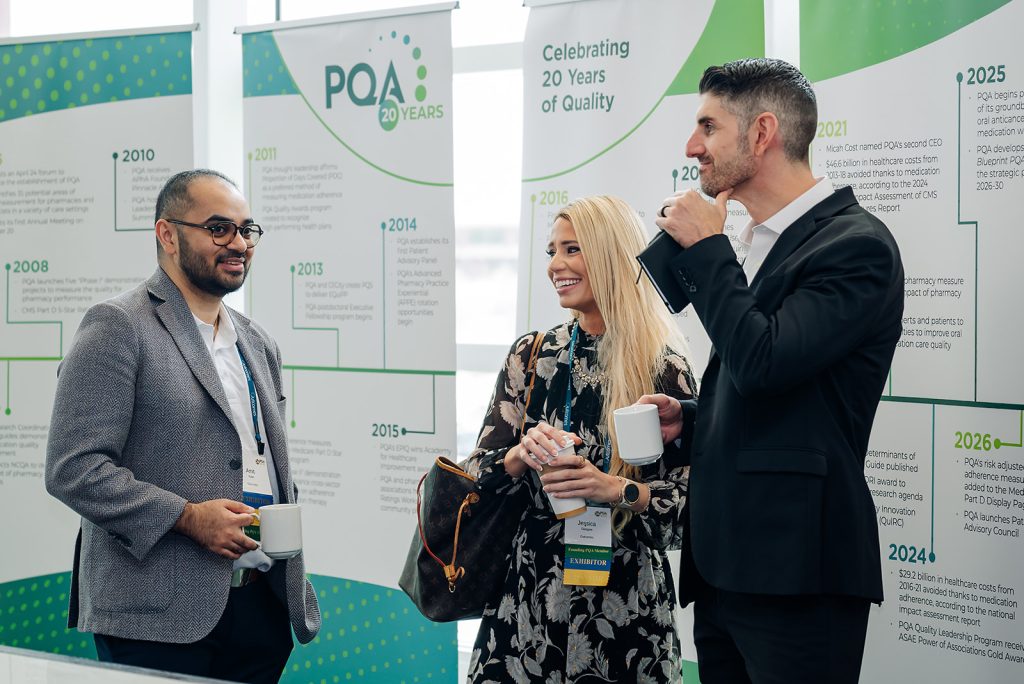
Attendees engaged in a series of special sessions, briefing sessions, wellness programs and networking events, many of which took place throughout the Industry Showcase.















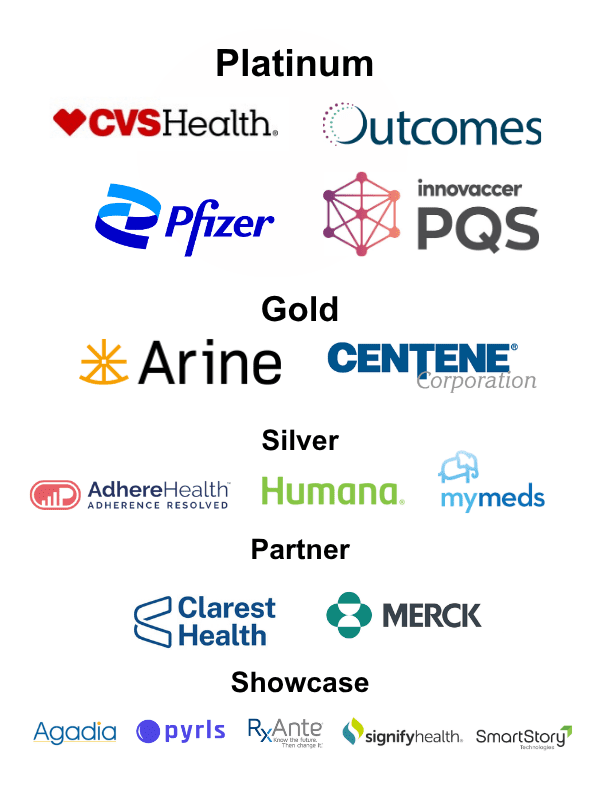
Thank you to all our sponsors for being partners in quality
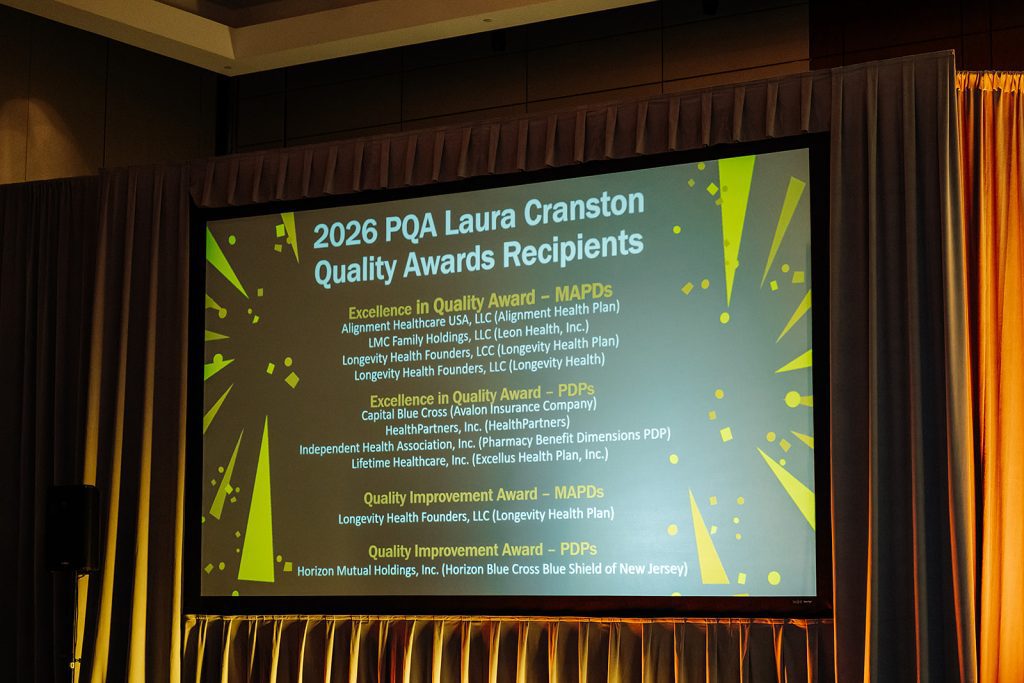
PQA also presented 10 Medicare plan contracts with a PQA Laura Cranston Excellence in Quality or Quality Improvement Award for high achievement or significant improvement in PQA measures of medication safety and appropriate use.

Save the date to join us at the 2027 PQA Annual Meeting, May 10-12, in Indianapolis, Ind. Attendees can access information about the 2026 meeting in the meeting app through June 18, 2026.